






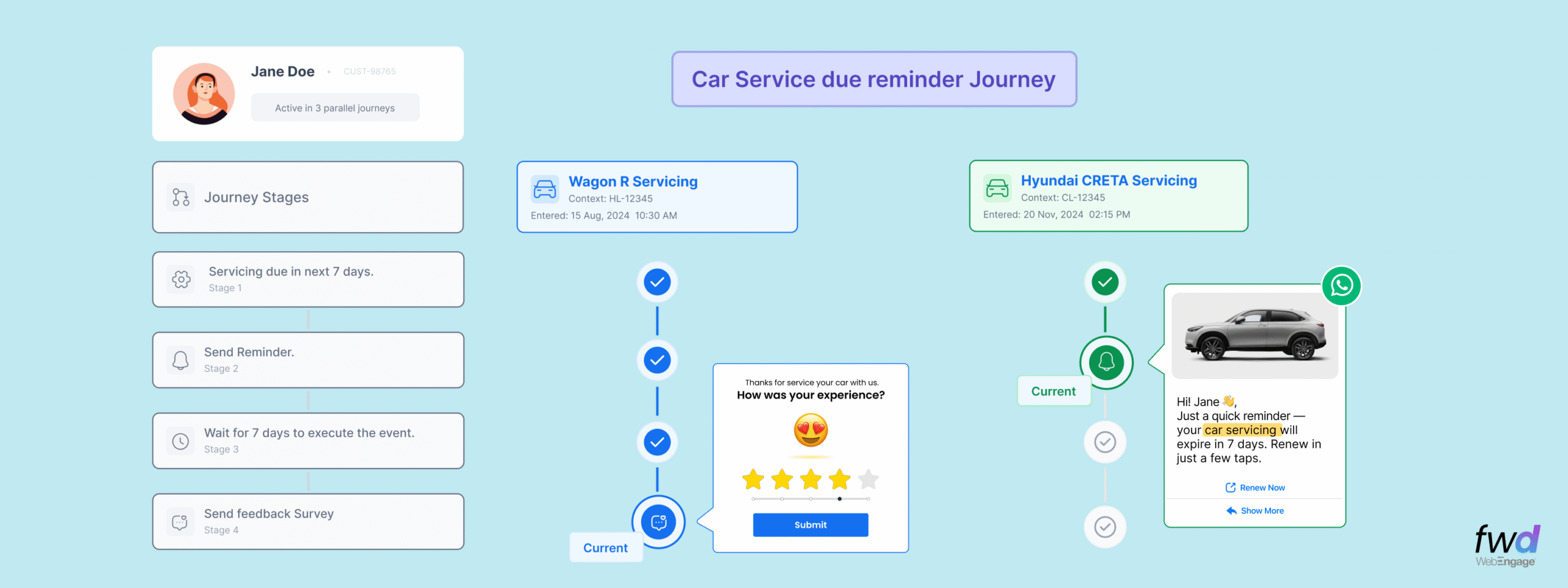
Did you know? WebEngage is the ONLY full-stack Customer Engagement Platform that lets you run multiple, parallel journeys for the same user, each tied to its own context.
For years, journey builders everywhere have been restricted by a fundamental limitation:
One user. One active journey trip. One storyline, no matter how complex their real life is.
But users don’t live single-threaded lives.
- A banking customer may have three loans running at the same time.
- An insurance policyholder may have multiple active policies.
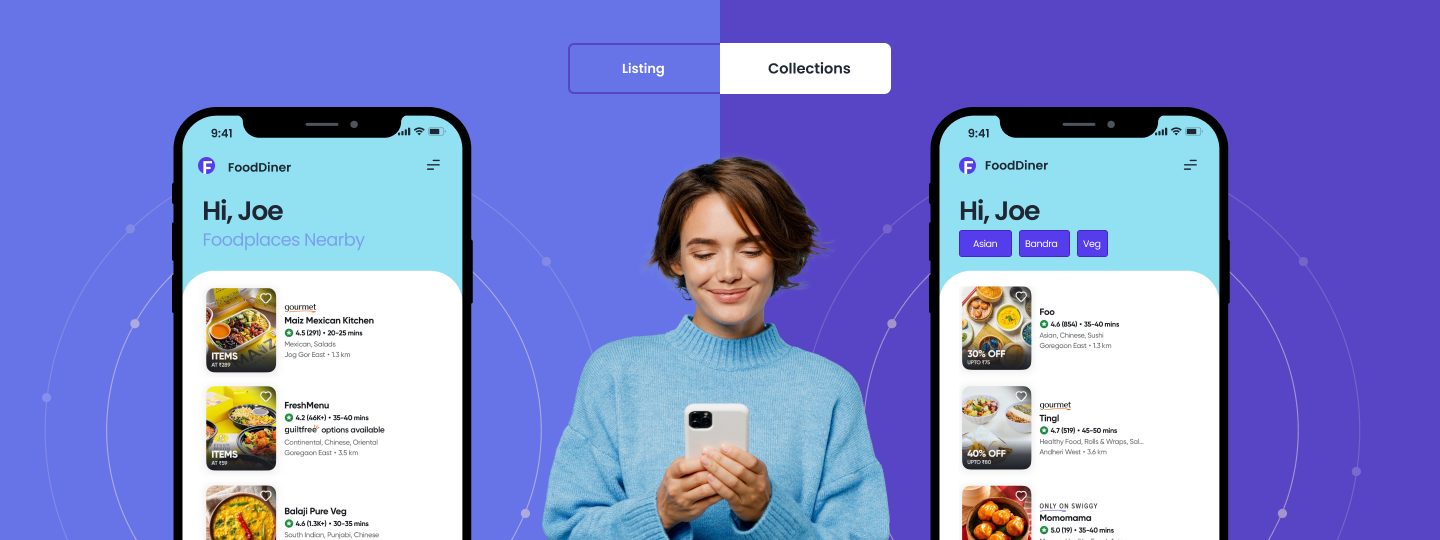
- An e-commerce shopper may browse four categories simultaneously — fashion, electronics, beauty, home.
Yet, traditional journey systems force all of this into a single, flat user-level journey.
The result?
Missed nudges. Incomplete engagements. Broken personalization. Not anymore.
Today, we’re excited to introduce Contextual Journeys ; a first-of-its-kind capability available only on WebEngage, built to match the multi-dimensional behavior of today’s consumers.
What Are Contextual Journeys?
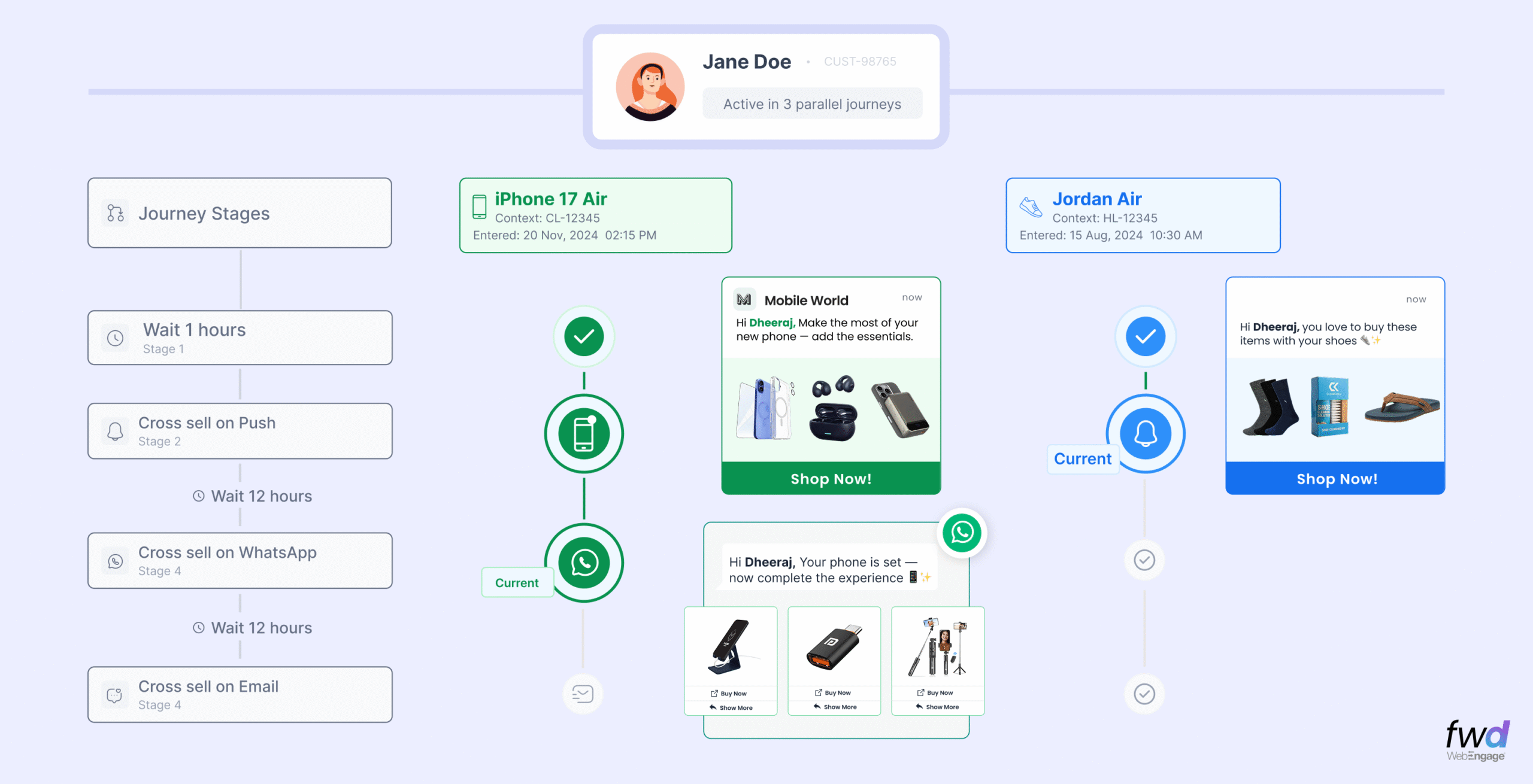
A Contextual Journey is a journey that tracks not only the user but also a specific context tied to that user.
A context is any user-defined attribute such as:
- Product ID
- Loan ID
- Policy number
- Category viewed
- Subscription type
- Vehicle ID
- Booking ID
In simple words:
User-based Journey → 1 active trip per user
Contextual Journey → Multiple active trips per user (one per context)
Every journey trip is identified as:
User + Context = Unique Journey Trip
This means the same user can now enter the same journey multiple times, in parallel, each for a different context.
Why Do You Need Contextual Journeys?
Because real-world customer behavior isn’t linear.
Let’s break it down by industry:
📌 Insurance
A user with three active policies should receive:
- Renewal reminders for each policy separately
- Premium reminders for each policy
- Claim follow-ups for each policy
Traditional journeys fail here — users can only enter the journey if there are no active trips for that user.
WebEngage solves this.
📌 Banking & Lending
A customer with:
- A home loan
- A personal loan
- A credit line
…should be nudged differently for each one.
Repayment reminders, delinquency follow-ups, top-up offers, all require context-specific automation.
Only WebEngage allows one user to run three journey trips simultaneously – one per loan.
📌 E-Commerce & Marketplaces
Users browse across:
- Fashion
- Mobile phones
- Beauty
- Home & kitchen
Each category needs a different trip, cart abandonment, browsing recency, conversion nudges.
With Contextual Journeys, you can run category-specific journeys, all for the same user, at the same time
Why This Is a WebEngage Differentiator
No other Martech platform supports the idea of multiple active journeys for the same user.
| Others | WebEngage |
| ❌ Limit 1 active journey per user | ✅ Multiple parallel journeys |
| ❌ Cannot nudge per loan/policy/product/category | ✅ Category, loan, policy, or product-specific journeys |
| ✅ Real-world complexity modeled natively |
How to Create a Contextual Journey in WebEngage
Contextual Journeys work on one simple principle:
👉 They must be triggered by the occurrence of an event.
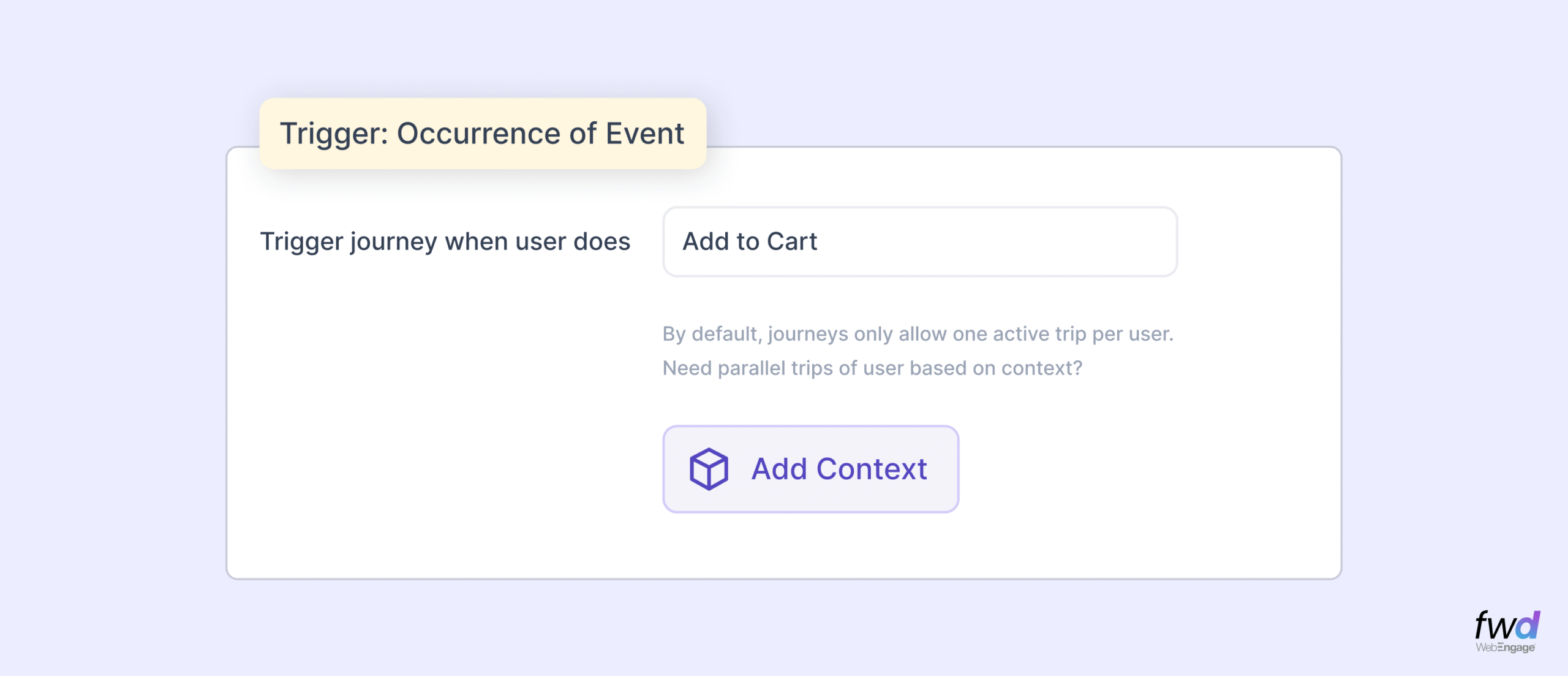
Step 1 – Start your journey as usual
Create a new journey.
Select Occurrence of an Event as your entry trigger.
Step 2 – Add Context
Below the trigger settings, you’ll see a new option:
“Add Context”
Click it → Enter a Context Name (e.g., “Loan ID”, “Category”, “Policy Number”).
Step 3 – Select the Attribute Representing the Context
Once the name is saved, a new dropdown appears.
Choose the event attribute that represents your context (e.g., loan_id, category_id, policy_id).
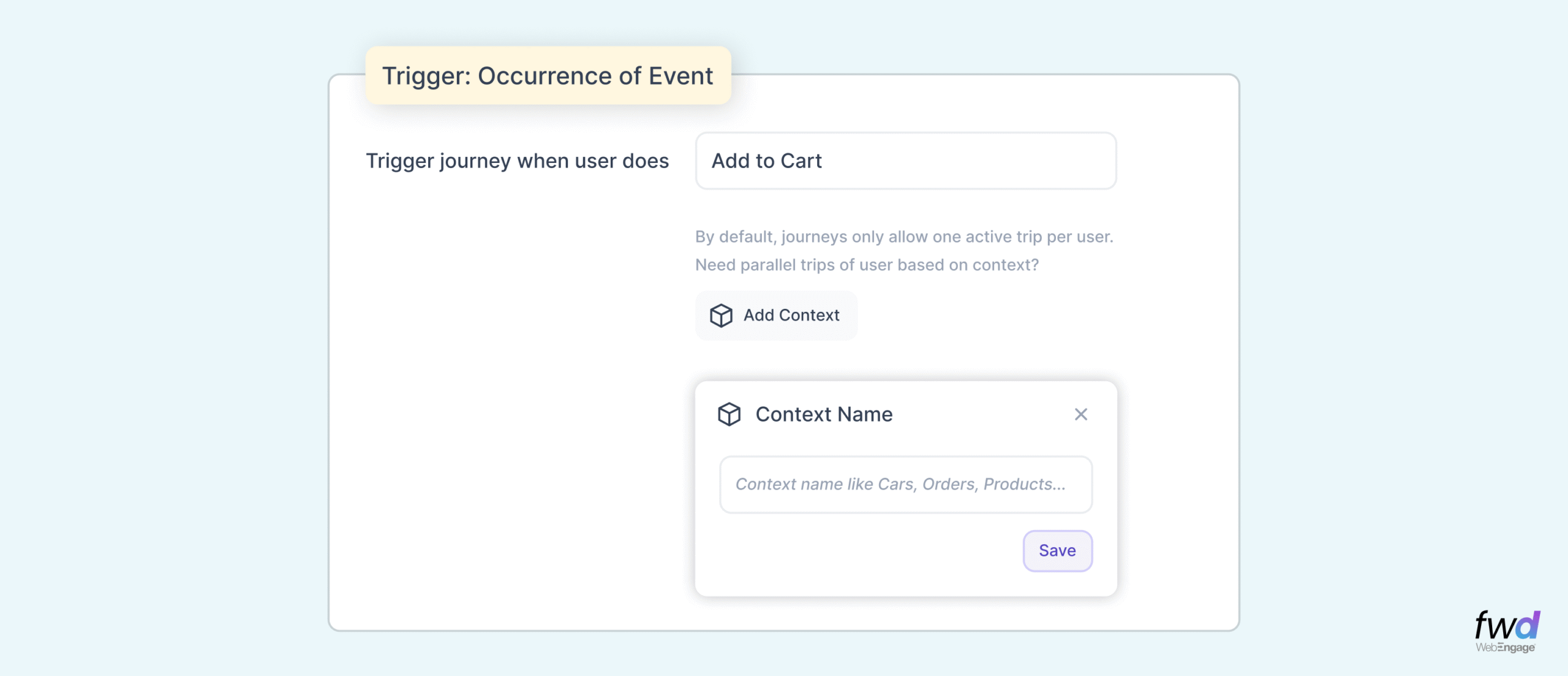
Save it, and you’ve just created a Contextual Journey.
Context in Other Blocks: Wait for Event & Exit Trigger
Context is not limited to the journey entry.
You can also set context-specific rules inside:
Wait for Event
Wait for a specific event within the same context.
Example:
Wait for “Payment Successful” for the same loan ID the user entered with.
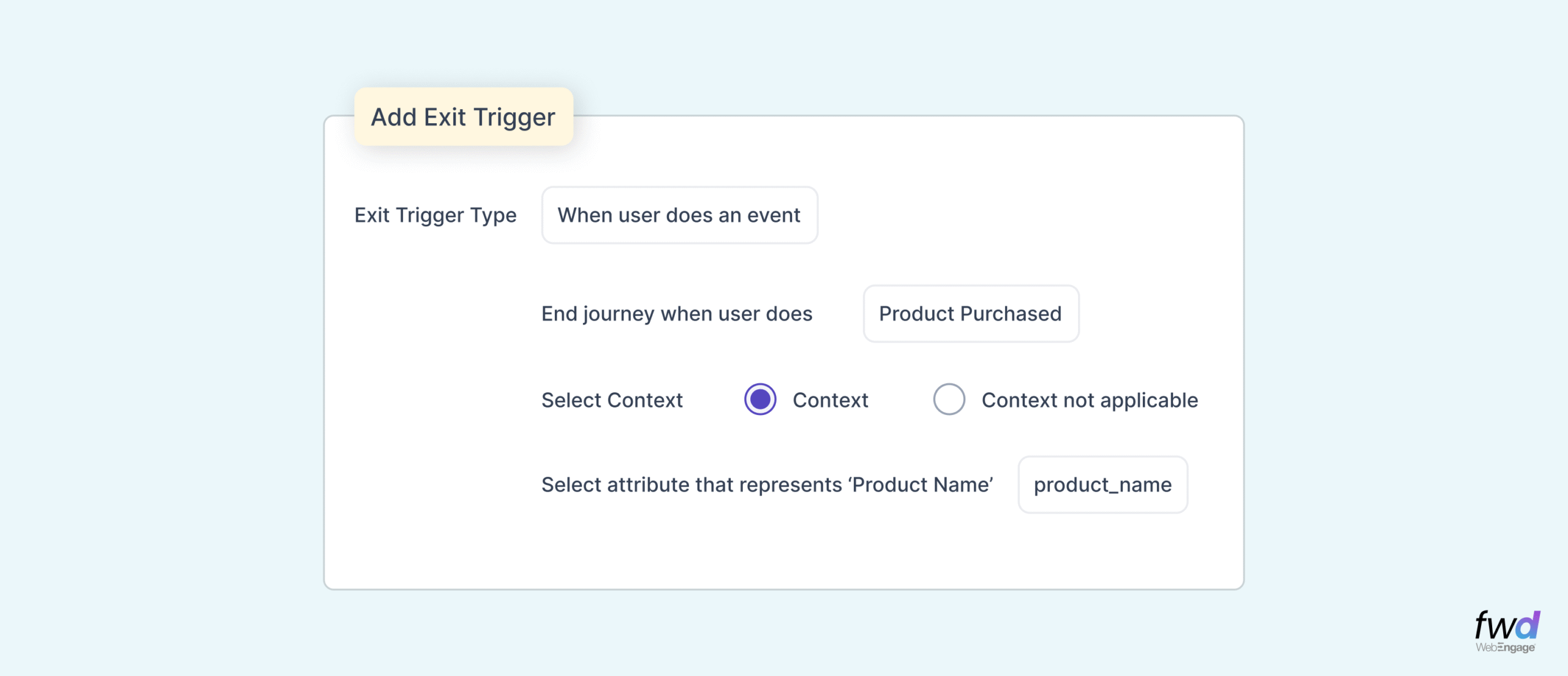
Exit Trigger
End the journey when a context-specific event happens.
Example:
Exit when “Policy Renewed” occurs for the same policy number.
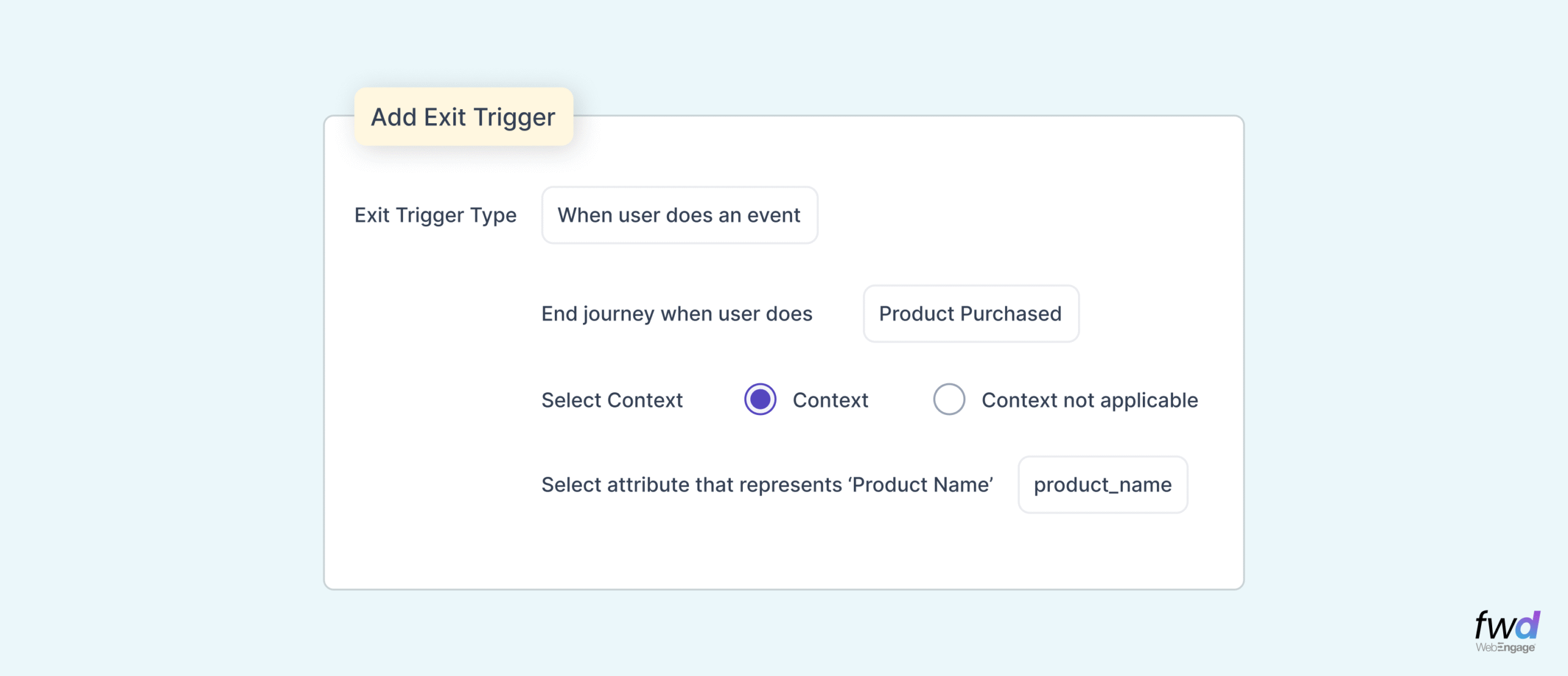
This ensures the entire journey stays context-bound end-to-end.
Why Contextual Journeys Will Redefine Retention Marketing
Because customer engagement has outgrown user-level personalisation.
Businesses operate on:
- multi-policy customers
- multi-loan customers
- multi-category shoppers
- multi-device subscribers
- multi-order journeys
And now, for the first time in Martech, your journeys can finally match that complexity – automatically, cleanly, and at scale.
WebEngage Contextual Journeys
One user. Unlimited contexts. Infinite personalisation possibilities.
And no other Customer Engagement Platform platform supports this.
Watch the short video below to see the capabilities in action.
 Harshita Lal
 Inioluwa Ademuwagun
 Ananya Nigam